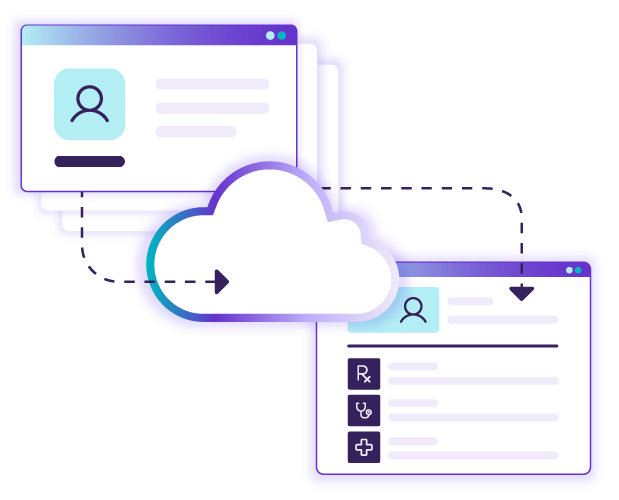
Capture completed care that claims miss, improving numerator capture and exclusion accuracy.
Earlier Care Gap Closure
Spot open gaps while there’s still time to close them, not after the measurement year ends.
Smarter Care Management
Act on lab trends and clinical signals to reach high-risk members before problems escalate.
More Accurate Risk Adjustment
Support HCC coding and RADV defensibility with diagnoses documented by providers.
the impact
What the Full Picture Is Worth to Payers
When claims meet clinical data, quality scores, Star Ratings, and revenue move together.
HEDIS swing vs. claims-only
15-25
Value of a 3.5-to-4 Star jump
$40-60M
Chart chases cut per season
20000+
Added data points per member
100s
Quality on FHIR
Half the Story Is No Longer Enough
Data that shows up after the reporting season can’t change the outcome.
Claims tell you what was billed. They miss the lab result that closes a diabetes care gap, the blood pressure reading that confirms control, the screening charted but never coded.
Clinical data used to be the hard part: scattered across EHRs, locked in inconsistent formats, too costly to collect at scale. Not anymore.
Interoperability 2.0 brings it all together on FHIR®, built for how payers actually operate.