CUSTOMER STORY
How a leading Blues plan tackled phased CMS-0057 deadlines, seven utilization management vendors, and a legacy platform on borrowed time — and came out ahead.
Regional Blues Health Plan
Commercial & Medicare Advantage
3+ Million
This regional Blues health plan was navigating a perfect storm. CMS-0057-F introduced phased compliance deadlines across Prior Authorization, Provider Access, Payer-to-Payer Data Exchange, and Patient Access. The BCBSA Interoperability Hub mandate — requiring all Blues plans to route Electronic Prior Authorization and Provider Access transactions between Home and Host Plans — added another layer of complexity.
To make matters worse, the incumbent FHIR repository vendor’s license was expiring and years of data quality issues had eroded confidence. Prior authorization workflows were also fragmented across seven delegated utilization management (UM) vendors.
Additionally, standing up a Payer-to-Payer Data Exchange network meant managing every connection, establishing a vetting process, and taking on ongoing relationships, an operational burden the team had neither the capacity nor the desire to take on.
The Stakes
CMS-0057-F Compliance Deadlines
APIs Required on a Single Platform
Delegated UM Vendors Managed
Payer-to-Payer Connections or Infrastructure In Place
Blues-Specific Routing Requirement
The plan went to market with a formal RFP. They weren’t just looking for a compliance vendor, they needed a partner who could take on the complexity.
Their requirements
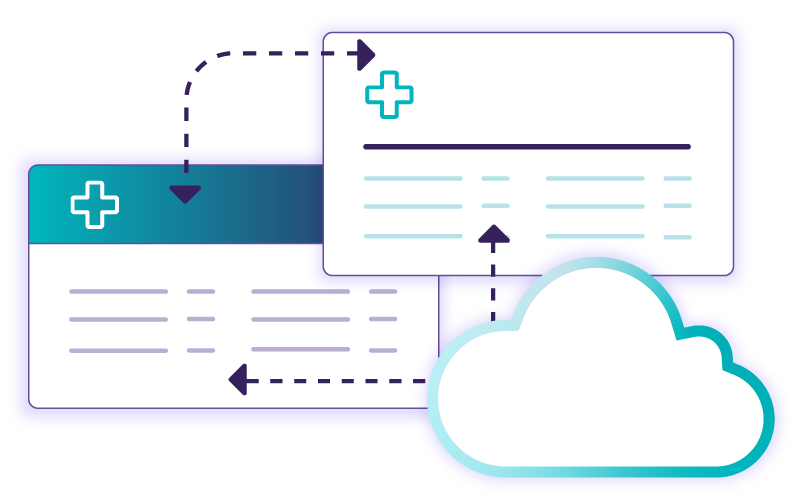
1upHealth won the competitive RFP, displacing the incumbent vendor. Unlike the legacy platform, the 1up Platform was built to do more than just store FHIR data. It gave the plan a single architecture for the full CMS-0057-F mandate. It also solved the data quality problem the legacy system never could, ingesting data from source systems and normalizing it into a consistent, reliable model.
For a plan juggling prior authorization across multiple utilization management systems, 1upHealth’s Intelligent Routing Engine was a particularly strong fit. Rather than forcing providers to navigate each UM separately, it created one consistent entry point, automatically directing requests to the right system behind the scenes.
1upHealth also took BCBSA Interoperability Hub connectivity off the plan's plate entirely, managing the routing of transactions between Home and Host Plans without requiring the plan to build or maintain that infrastructure.
On the Payer-to-Payer side, the decisive factor was 1upHealth's network strategy. Where other vendors offered point-to-point connections or had no answer at all, 1upHealth brought a pre-built, managed one-to-many payer network. Every connection, vetting process, and ongoing relationship is fully owned by 1upHealth, not the plan.
When the incumbent vendor became uncooperative post-RFP, 1upHealth accelerated the migration — keeping data exchange operations running while absorbing the heavy technical lift internally.
Learn how 1upHealth can support your CMS compliance journey.